Most comparisons of Squarespace vs Shopify are written for people who haven’t launched yet. They list features, pricing tables and “who it’s best for” in very broad strokes. That’s not very helpful when you already run a store, know Shopify from the inside, and are trying to decide whether moving to Squarespace is a smart step or just a distraction. Many of the questions that come up at this stage only really make sense once you’ve reviewed Shopify from the inside out.
This comparison looks at Squarespace vs Shopify from that specific, real-world perspective: an existing store, a live catalog, real customers, and a website that has to keep working while you evolve it. We’ll focus on how each platform behaves once the honeymoon period is over, where Shopify still clearly leads, where Squarespace becomes a better fit, and what “better” actually means if you are thinking about migration.
The Big Picture: What Each Platform Optimizes For
Before diving into details, it helps to accept one simple truth: Squarespace and Shopify are not trying to win the same race.
Shopify is built as a commerce engine first. Everything orbits around products, carts, checkout, apps and integrations. Content, pages, and layout options exist, but they sit downstream from the store.
Squarespace is built as a site and brand platform with commerce built in. Pages, sections, blogs, portfolios and visual structure are first-class citizens. The store is important but shares space with storytelling and design.
If your current store is heavily shaped by Shopify’s “store-first” mentality and you often feel that your content and visual identity are crammed into its templates, you are already experiencing this philosophical difference. The rest of this article is about what that difference means in practice.
Design and Content Experience
This is usually where Squarespace first catches the attention of someone coming from Shopify.

On Shopify, the way your site looks is anchored in the theme you chose, plus whatever customizations and apps you layered on top. Some themes are flexible and modern, but you are often working against the grain when you need layouts that feel like a magazine feature, a case study, or a carefully paced landing page. Apps can help, but each one brings its own UI, styles and quirks, which sometimes clash with the theme.
Squarespace approaches design as a curated system. Templates are fewer but more deliberate. Sections and content blocks are designed to work together out of the box, so typography, spacing and overall rhythm stay consistent even as you experiment with layouts. Long-form pages, portfolios, lookbooks and editorial-style content are not hacks-they’re a natural use case.

If your store has reached the point where your brand narrative, imagery and long-form content matter as much as product grids, Squarespace feels like the environment that was actually built for that. Shopify can achieve similar results, but usually with more custom work and more moving parts.
Catalog and Store Management
Here the comparison starts tilting in the opposite direction.
Shopify is still more comfortable with large, complex catalogs. Thousands of SKUs, multiple collections, automated tagging, sophisticated inventory rules, different price tiers and warehouse configurations-this is where Shopify’s DNA really shows. The admin is structured around handling a serious store, and the ecosystem assumes you might need advanced tools for things like bulk editing, purchasing, fulfillment, or B2B logic.
Squarespace Commerce is tuned for small to medium catalogs. Dozens or low hundreds of products with variants are typically fine. Inventory management and product options cover the needs of most boutique brands, small DTC stores, creators and service-plus-product businesses. However, when the catalog gets very deep or operational complexity spikes, you start feeling the edges of what Squarespace wants to handle.

So if your main challenge is catalog size and operational complexity, Shopify keeps an advantage. If your catalog is focused and you care more about how products are framed, described and visually integrated into your content, Squarespace’s lighter approach is often preferable.
Apps and Extensions vs. an Integrated Toolkit
One of Shopify’s superpowers is its app ecosystem. If there is something you want the store to do-subscriptions, advanced shipping rules, loyalty and rewards, upsell funnels, detailed reporting, custom product builders-the odds are high that an app (or combination of apps) exists for it. This is a blessing when you truly need that level of specialized functionality.
But from the perspective of a store that has been running for a while, the same ecosystem can feel like a burden. You might recognize the pattern: a handful of apps at the start turns into a dozen or more over time. Each has its own billing, UI, support, and impact on performance. Updating themes or switching apps becomes a mini-project every time.
Squarespace takes a different route. The platform includes most core website and basic marketing functions by default: pages, blog, galleries, forms, a store, simple email campaigns, pop-ups, announcement bars. There are extensions and integrations, but the philosophy is “fewer, more integrated tools” rather than “apps for everything”.
If your current Shopify setup depends on very specific, advanced apps, this is a reason to stay. If, on the other hand, many of your apps exist mostly to patch design, layout or small missing pieces, moving to Squarespace often means trading a stack of add-ons for a simpler, more predictable toolkit.
SEO, Content Marketing and URL Structure
From an SEO standpoint, both platforms allow you to rank, attract organic traffic and manage basic on-page elements. But how they support SEO-driven work day to day feels different.
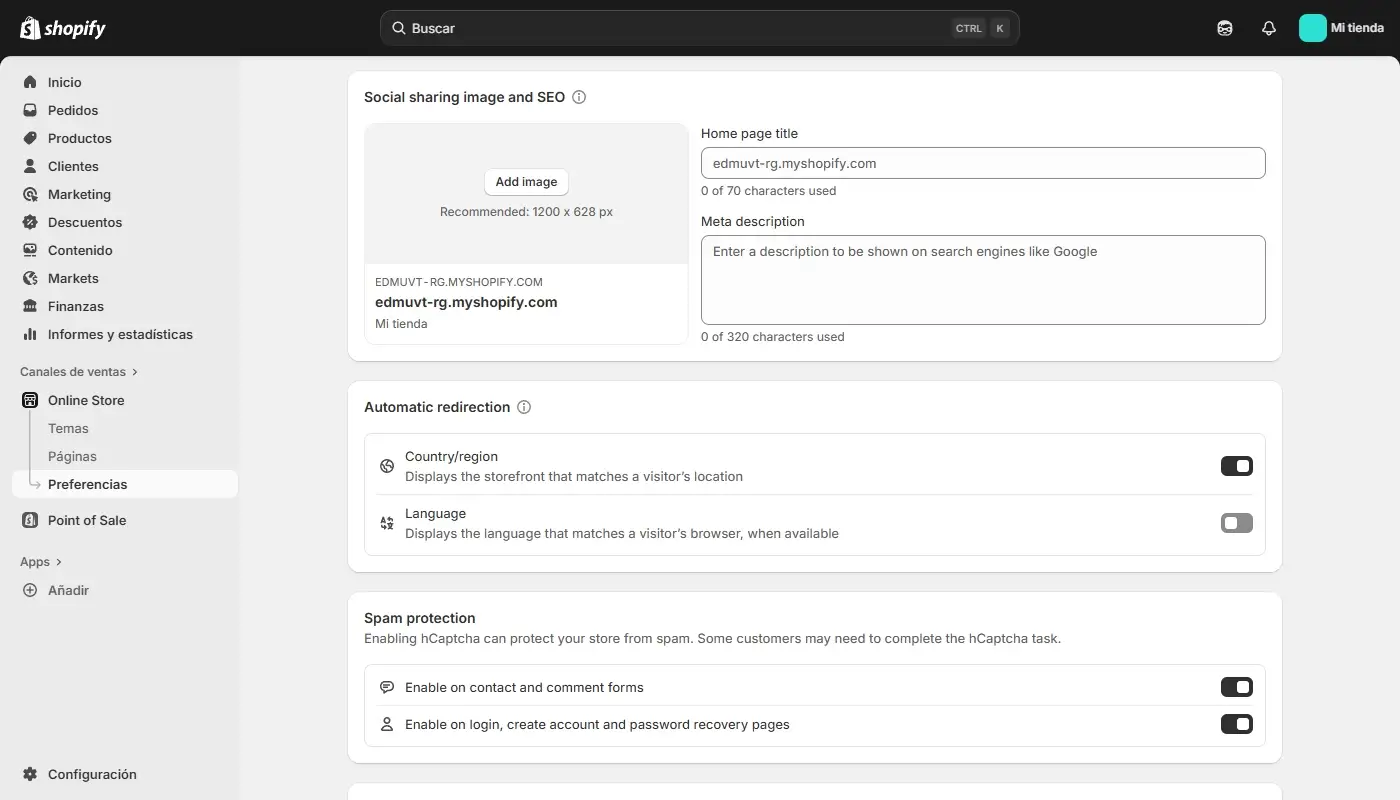
Shopify allows you to set titles, meta descriptions, slugs and handle redirects. It also offers structured data support and works well with SEO apps that provide content analysis, internal linking tools and reporting. For large catalogs and content tied to product templates, this infrastructure scales well.
Squarespace offers clean URLs, meta controls, page-level settings and built-in redirects too. Where it tends to shine is in content-driven SEO: creating and maintaining a blog, guides, resource hubs, and longer articles that support your products. The visual editor makes it easier to lay out content-rich pages that are actually pleasant to read and share, which is not a trivial detail if content marketing is a serious acquisition channel for you.
The trade-off is that Shopify’s ecosystem includes more specialized SEO tools for very large or aggressive SEO operations, while Squarespace trades some of that specialization for easier execution of content within a unified design system. For a store that leans heavily on content, that ease of execution can matter more than the ability to wire in multiple niche SEO apps.
Costs, Complexity and “Mental Load”
A purely numerical price comparison between Shopify and Squarespace is rarely enough, especially once apps, domains, email tools and third-party services enter the picture. The more relevant comparison is overall cost and complexity of ownership.
On Shopify, the base subscription might be attractive, but add to it:
- upgraded plans if you need certain features,
- payment processing fees,
- multiple paid apps for critical functions,
- development costs for theme tweaks and debugging.
On Squarespace, plans combine hosting, templates, core site features and commerce, with some additional options like email campaigns. You still might pay for external tools (for example, specialized email or analytics), but the number of separate subscriptions tends to be lower, and theme-level development is less of a recurring requirement.
Equally important is the mental load. Shopify asks you to think about themes, app interactions, occasional code, and how each change might ripple through your store. Squarespace asks you to think in terms of sections, layouts and content. For some business owners, that shift represents a significant drop in day-to-day stress.
Quick Comparison Table: Squarespace vs Shopify
To summarize the key differences from the perspective of a store that already exists and may be considering migration:
| Aspect | Squarespace | Shopify | Typically Better For… |
| Core philosophy | Website & brand platform with commerce built in | Commerce engine with content and pages around it | Squarespace: brand- and content-led sites; Shopify: pure eCommerce at scale |
| Design & layouts | Curated templates, strong visual system, easy editorial pages | Theme-driven, flexible but often needs code/apps for complex layouts | Squarespace for design/storytelling; Shopify for standard store layouts |
| Content & blogging | Native focus on pages, blogs, portfolios and mixed media | Blog and pages exist, but store templates dominate | Squarespace for content marketing and narrative-heavy brands |
| Catalog size & complexity | Best for small to medium catalogs with simpler operations | Built for large catalogs, complex inventory, multi-warehouse setups | Squarespace for focused catalogs; Shopify for high SKU counts and complex logistics |
| Apps vs built-ins | Fewer extensions, more built-in site and marketing tools | Huge app ecosystem for almost any specialized need | Squarespace for simplicity; Shopify for advanced, niche functionality |
| SEO in everyday work | Strong for content SEO, clean URLs, easy long-form layouts | Strong for product SEO with support from specialized apps | Squarespace for content-led SEO; Shopify for big product-driven SEO operations |
| Multi-channel & automation | Supports basics; more limited for highly automated, multi-channel setups | Deep ecosystem for automation, multi-channel selling and complex workflows | Squarespace for simpler setups; Shopify for automation-heavy, multi-channel growth |
| Technical overhead | Minimal code, most changes via visual editor | Themes, Liquid, and app interactions often require technical oversight | Squarespace for teams without developers; Shopify for teams with technical resources |
| Overall cost structure | Fewer separate tools; more predictable but less extensible | Base plan + apps + dev; can be powerful but fragmented | Squarespace for predictable, lean stacks; Shopify for complex, high-ROI setups |
This table is not about “better vs worse” in the abstract. It highlights which platform is more aligned with particular business realities, especially once the store has been running for a while.
When Shopify Is the Clear Winner
There are scenarios where Shopify simply fits better, no matter how attractive Squarespace looks.
If you run a large, complex store with thousands of products, international warehouses, advanced fulfillment, or B2B logic, Shopify’s tooling and ecosystem are hard to beat.
If your business relies heavily on very specific apps or integrations-for example, subscription platforms with nuanced logic, bespoke reporting systems, or industry-specific tools that exist only in the Shopify ecosystem-recreating all of that in Squarespace might be impractical.
If your strategy is centered around high-volume, automation-heavy eCommerce, with deep multi-channel selling and aggressive growth experiments, Shopify remains tuned for that type of game.
In these cases, the conversation is less about Squarespace vs Shopify and more about how to make Shopify work better for you.
When Squarespace Becomes the Better Fit
On the other hand, there is a fairly clear profile of stores for which Squarespace becomes a more natural home after a period on Shopify.
The catalog is focused rather than huge. The brand puts strong emphasis on imagery, narrative and polished presentation. The site needs to host not just products, but also services, portfolios, journals, case studies or resource libraries. The owner wants fewer moving parts, fewer bills, and fewer “surprises” when a theme or app updates.
In that context, Squarespace’s integrated, design-centric approach often feels like breathing room. Instead of constantly solving structural and technical puzzles, you spend more time shaping the way your brand appears, speaks and guides visitors through a smaller, carefully curated catalog.
Squarespace also aligns well with hybrid business models that blend services, content and products. A site that needs to present a team, explain services, host a blog, showcase visual work and sell a small to medium catalog finds a more natural home in a system that treats all of those elements as first-class. Commerce is important, but not the only citizen. It’s simpler to analyze that through the lens of real migration projects in our in-depth Squarespace overview for former Shopify store owners, with concrete examples of features, limits and typical migration decisions.
Migration: The Practical Bridge Between the Two
Thinking in abstract about platforms is one thing. Actually moving from Shopify to Squarespace is another.
A serious migration is not just exporting products and importing them somewhere else. It requires planning around URL structure, 301 redirects, product data, variant logic, SEO metadata, content layouts and any app-dependent flows that affect customers.
Squarespace can replicate a lot of what your existing site does, but sometimes through different mechanisms or slightly different user paths. Getting that translation right-so that your store feels familiar to customers, search engines keep finding you, and your team understands the new editing model-is the difference between a smooth transition and a painful reset.
If you’re already thinking about Squarespace as a next step, it is worth evaluating not only whether you should move, but also how. That “how” will often determine how quickly you feel the benefits of the new platform instead of getting stuck in migration issues.
Conclusion: Two Strong Platforms, One Right Direction for You
Squarespace and Shopify are both strong, mature platforms-but they are optimized for different things. Shopify is at its best as a scalable commerce engine with deep app support and the ability to handle large, complex catalogs. Squarespace is at its best as a design-led, content-friendly environment with integrated commerce and a calmer, more unified toolkit.
If your business is evolving towards a brand-led, content-rich, design-conscious presence with a manageable catalog, it is completely natural that Squarespace starts to look like the better long-term home. In that case, the real question is not “which platform is objectively better”, but “which platform aligns with how my brand actually works now?”When the answer points towards Squarespace, the next step is planning the migration carefully so that products, content and SEO structure make the move with you. That kind of work is exactly what a specialized Shopify → Squarespace migration service handles in practice – turning a platform decision into a working, live site that feels like an upgrade rather than a reset. And if you’d like to zoom out beyond this one comparison and look at other possible migration directions in our guide to the best Shopify alternatives that gives you the full picture of where Squarespace sits among the available options.