By 2025, Shopify is no longer a “new” choice for most store owners. It’s a platform you live with over years: you set it up, stack apps, adjust themes, run campaigns, and slowly discover not just what it can do, but how it shapes the way your business operates and looks online.
At some point, the question stops being “is Shopify good or bad?” and turns into something more nuanced: does Shopify still match what my brand has become? The store is working, orders are coming in, but maybe you now care more about long-form content, portfolio-style layouts, a calmer tech stack, or a different balance between store and storytelling. That’s usually the moment when a platform like Squarespace appears on the horizon as a serious alternative.
This article takes Shopify as it is in 2025 – mature, capable, and heavily optimized for commerce – and looks at it from three angles: where it still shines, which drawbacks tend to surface only after a few years of growth, and why moving to Squarespace sometimes becomes a rational, not emotional, decision.
Shopify’s Core Strengths in 2025

The easiest way to understand why people stay with Shopify for years is to look at what it genuinely does very well.
First, there is the infrastructure and reliability. Shopify feels solid under load. Seasonal spikes, flash sales, new product drops – most of this works without you thinking about servers or scaling. For businesses that cannot afford downtime, this underlying stability is a real asset.
Second, checkout and payments remain one of Shopify’s strongest areas. The checkout flow is familiar to millions of shoppers, optimized for conversion, and deeply integrated with major payment providers. If your primary focus is efficient order processing and frictionless purchasing, it is hard to argue with how polished this part of the system has become.
Third, Shopify is built to handle complex and large catalogs. Thousands of SKUs, detailed collections, tags, automated rules and robust inventory tracking – this is where the platform feels completely at home. For businesses whose main challenge is managing breadth and depth of products, Shopify often fits like a glove.
Finally, the ecosystem around Shopify is enormous. Themes, apps, agencies, consultants, tutorials – there is an answer for almost every specific need. Need subscriptions, a particular shipping rule, a loyalty engine, a product configurator, a complex analytics dashboard? Very often the solution is a matter of choosing and wiring up the right app combination.
All of this explains why Shopify became, and remains, one of the default choices in eCommerce. But these same strengths can become sources of friction later, especially for brands that evolve beyond being “just” an online store.
The Hidden Drawbacks That Appear Over Time
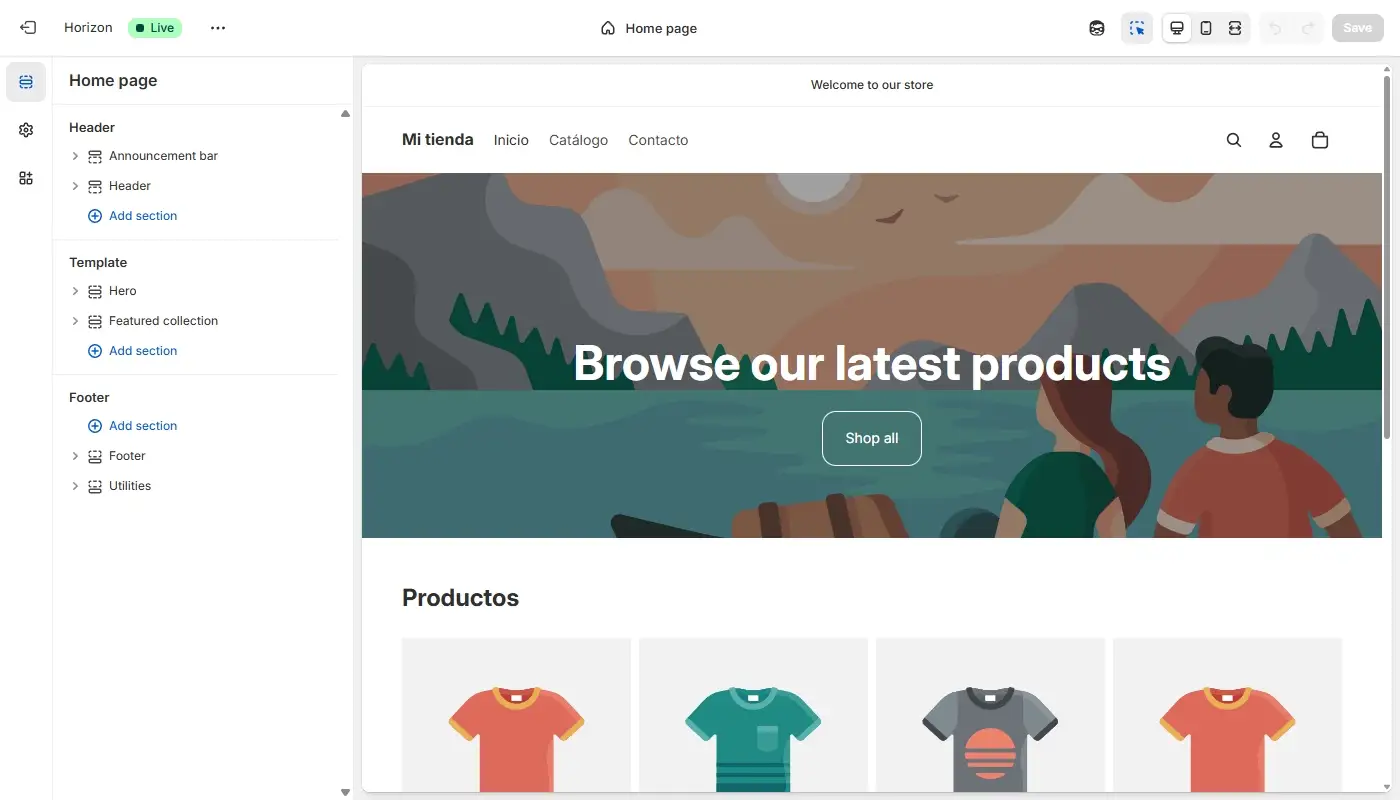
Most frustrations with Shopify don’t show up in month one. They arrive quietly, usually after the store has been running and growing for a while.
One of the first friction points is design and layout rigidity. Even with improvements in theme customization and online store editors, many merchants find themselves fighting the theme whenever they want pages that feel more like editorial layouts, case studies, lookbooks, or long-form landing pages. The system always gently nudges them back toward grids, product lists and fairly standard sections. As a result, the site can start to feel like “store first, brand second”, even when the brand deserves a more expressive presentation.
Another drawback is the gradual app dependency that creeps in. Early on, adding a few apps seems like smart optimization. Over the years, the count grows: reviews, pop-ups, email capture, upsells, subscriptions, translations, specialty shipping rules, bundles, analytics, and more. Each one brings its own settings, UI, billing and potential to interfere with theme updates or with each other. You end up not just running a store, but maintaining a small ecosystem of micro-tools glued together inside Shopify.
Costs tend to reflect this ecosystem. There is the base subscription, possibly an upgraded plan, payment processing fees, and then recurring app charges – some small, some substantial. None of this is inherently bad, but for lean brands that value predictability, the total monthly spend can start to feel out of proportion to the real complexity of their business.
There is also the question of technical overhead. Serious visual or functional changes still often mean touching Liquid templates, editing theme code, or relying on a developer. Many store owners reach a point where they no longer want to open a code editor or worry that a small tweak might break a key template. They want a site where content, layouts and most design adjustments can be made safely from a visual interface.
Finally, Shopify’s store-first philosophy becomes limiting for businesses that need a more balanced structure. When your brand includes services, events, content hubs, or portfolios in addition to products, it can feel like you are always trying to make a commerce platform behave like a storytelling platform. These limits are especially visible when you compare Shopify side by side with a design-led platform like Squarespace.
When Staying on Shopify Still Makes Sense

Before talking about moving away, it’s important to be clear about when Shopify is still the more logical choice.
If your catalog is large, complex or very dynamic, with lots of SKUs, frequent product changes, advanced inventory logic and multiple warehouses, Shopify’s data model and tooling are a strong fit. Platforms oriented toward smaller catalogs, including Squarespace, can cover many cases but are not designed for extreme scale in the same way.
If your business relies heavily on specific apps or custom integrations – for example, tightly coupled ERP systems, bespoke B2B portals, niche logistics software or highly specialized marketing tools – migrating may mean re-engineering that infrastructure. In those situations, modifying and optimizing the existing Shopify setup can be more economical than starting over elsewhere.
And if your growth strategy is built around aggressive multi-channel selling, complex automation and deep integrations with third-party marketplaces or warehouses, Shopify’s ecosystem is still one of the most accommodating environments you can choose.
Recognizing these situations helps avoid unnecessary migrations. The goal is not to move for the sake of moving, but to match the platform to the business you actually have.
Why Squarespace Starts to Look Attractive

Against this backdrop, Squarespace often appears not as a competitor to Shopify in raw eCommerce power, but as a better match for brands whose needs have shifted.
One recurring motivation is the desire for a more design-driven, visually coherent website. Squarespace puts layout, typography and visual rhythm at the center. Pages are built using sections and blocks that were designed to work together, so long-form stories, portfolios, case studies and campaign pages look polished without constant developer intervention. For brands that care deeply about how they look, this is not a small detail.
Another motivation is the appeal of a simpler, more integrated toolkit. Squarespace comes with many core website needs built in: pages, blog, galleries, basic email marketing, eCommerce, forms. Extensions exist, but the platform philosophy is different – fewer moving parts, fewer interdependencies, less configuration overhead. For store owners tired of juggling ten or more apps just to maintain basic flows, this calmer environment is a real advantage.
Squarespace also aligns well with hybrid business models that blend services, content and products. A site that needs to present a team, explain services, host a blog, showcase visual work and sell a small to medium catalog finds a more natural home in a system that treats all of those elements as first-class. This Squarespace overview for ex-Shopify merchants shows what typically changes when brands actually make the switch.
Lastly, many merchants are looking for more personal control over their site. They want to feel comfortable updating layouts, experimenting with sections and launching landing pages on their own schedule. Squarespace’s editor is deliberately designed for that kind of autonomous iteration, without constantly dipping into code.
How to Understand Whether Migration Is Right for You
Deciding whether to leave Shopify for Squarespace is not a simple yes/no question. A few reflections can clarify the picture.
Think about your catalog: how many products you carry now, and how far you realistically expect that number to grow. Consider whether your complexity lies in product structure and logistics, or in storytelling, branding and content.
Look at your current setup and ask which parts are truly essential. How many of your apps are mission-critical and irreplaceable, and how many fill small gaps that exist only because your theme or layout tools are limited? The more your stack is built on irreplaceable pieces of Shopify’s ecosystem, the more carefully you need to weigh a move.
Consider what you want your day-to-day work on the site to look like. If the ideal scenario is logging in, re-arranging sections, creating a new page, publishing a long article with mixed media, and doing it all without touching code or waiting for a developer, that vision is closer to how Squarespace is designed to be used.
And finally, be honest about the role of your website in your brand. If it is primarily a transactional engine, Shopify’s strengths may continue to outweigh its drawbacks. If it is increasingly a space for identity, narrative and experience – with commerce as one part of the whole – then a platform that was built for that kind of balance will likely feel more comfortable.
Conclusion
In 2025, Shopify is still one of the strongest foundations you can choose for a pure eCommerce operation. Its infrastructure, checkout and ecosystem are the result of years of focused development and for large or very complex catalogs that combination is hard to beat.
At the same time, many businesses evolve into something slightly different from what Shopify optimizes for. They become design-driven, content-rich, hybrid brands where pages, stories and visual identity are as important as product grids. For them, the very things that once drew them to Shopify – apps, themes, store-first structure – can start to feel like constraints.
Squarespace does not try to replace Shopify at its own game. Instead, it offers a different trade-off: a more integrated, visually consistent, content-friendly environment with solid commerce built in. For store owners who recognize themselves in that description, migrating is less about abandoning a platform and more about choosing one that matches where their brand is now. If you want to see how Squarespace stacks up not only against Shopify but also against other directions, our guide to the best Shopify alternatives puts all of these options into a single comparative context.
If you’re at that crossroads and want to explore what a move might look like in practice – how products, content, URLs and design could translate – this is exactly the type of work handled at Shopify-to-Squarespace.com, where migrations are planned around real stores rather than abstract checklists.