“Shopify alternatives” is a broad phrase. It covers everything from simple drag-and-drop builders to fully self-hosted setups that behave more like frameworks than platforms. For a brand that already runs on Shopify, this variety is both good and overwhelming.
In practice, most store owners are not asking, “What else exists?” but something more specific: “If Shopify no longer fits how my business works, where should I realistically go next?” The answer depends on what has changed in your business: catalog size, marketing channels, how important content has become, and how much technical overhead you’re willing to carry.
This article looks at the main Shopify alternatives in 2025 from the perspective of someone who already has a working store-not a brand-new project-and explains why, in many cases, the first platform worth evaluating is Squarespace, even though it is not the only option.
Why Store Owners Start Looking Beyond Shopify
Most merchants don’t look for alternatives because Shopify “stopped working”. They look because their business has shifted.
Sometimes the brand has become more design-driven. Photography, storytelling and editorial-style pages matter more than they did at launch. The theme, even with apps and custom blocks, keeps pulling everything back into standard grids and product lists.
Sometimes the issue is stack complexity. What started as a clean setup slowly accumulated apps for reviews, upsells, pop-ups, subscriptions, shipping rules, analytics and content. Each one has its own UI and billing; together, they turn simple changes into careful coordination exercises.
For other brands, the business model has changed. A store that began as “just eCommerce” now includes workshops, consulting, memberships or content libraries. The website needs to present a team, explain services, host resources and sell a manageable catalog-all without feeling like a product template wearing a disguise.
In these situations, “another Shopify-like platform” is rarely what’s needed. The real question becomes: which alternative matches the way the brand operates today, not the way it looked when the first store launched.
How to Judge Shopify Alternatives (Beyond Feature Checklists)
Before comparing specific platforms, it helps to define how you’ll judge them. For existing Shopify stores, a few criteria matter more than others – and when we analysed Shopify in depth, we kept coming back to the same set of questions:
- Design and content depth. Can you create pages that look and read the way you want-case studies, lookbooks, long-form guides-without rebuilding everything in code?
- Catalog and operations. Does the platform handle your current and near-future number of products, variants, locations and workflows comfortably?
- Ecosystem vs integration debt. Will you be assembling a fragile stack of plugins and apps again, or does the platform provide enough natively?
- Total cost of ownership. Not just plan prices, but apps, hosting, developer hours and the time you spend managing it all.
- Team autonomy. Can non-developers safely adjust layouts, create landing pages and publish content, or will every change require technical help?
- Migration realism. How difficult will it be to move your URLs, SEO, products and content into this new environment?
When you evaluate alternatives with these questions in mind, different patterns emerge-and Squarespace often rises to the top for a specific, very common type of business.
The Main Shopify Alternatives in 2025
There are many platforms on the market, but a handful usually come up repeatedly in conversations with ex-Shopify merchants:
Squarespace

Squarespace is a design-centric website platform that happens to include a capable commerce layer. It was originally built for people who care deeply about how their site looks and reads: designers, photographers, studios, writers, small brands. Over time, Squarespace Commerce evolved enough to support full online stores with physical products, digital products and basic subscriptions, without losing that design-first core.
In practice, Squarespace works best for brands that don’t define themselves solely by catalog size or operational complexity. If your store is built around a curated selection of products, strong photography and storytelling, it fits neatly into Squarespace’s strengths. The same template can host a polished home page, a blog, a portfolio, landing pages for campaigns and a store section that feels visually consistent with everything else.
For an ex-Shopify merchant, the main appeal is how much less effort it takes to get a site that feels “finished” and on-brand. You don’t assemble your layout from mismatched app widgets; you work inside a single design system where sections, typography and spacing are already harmonised. The trade-off is that Squarespace is not trying to be an industrial eCommerce engine. It can handle serious selling, but not the extreme edge cases of huge, highly automated catalogs.
WooCommerce (WordPress)
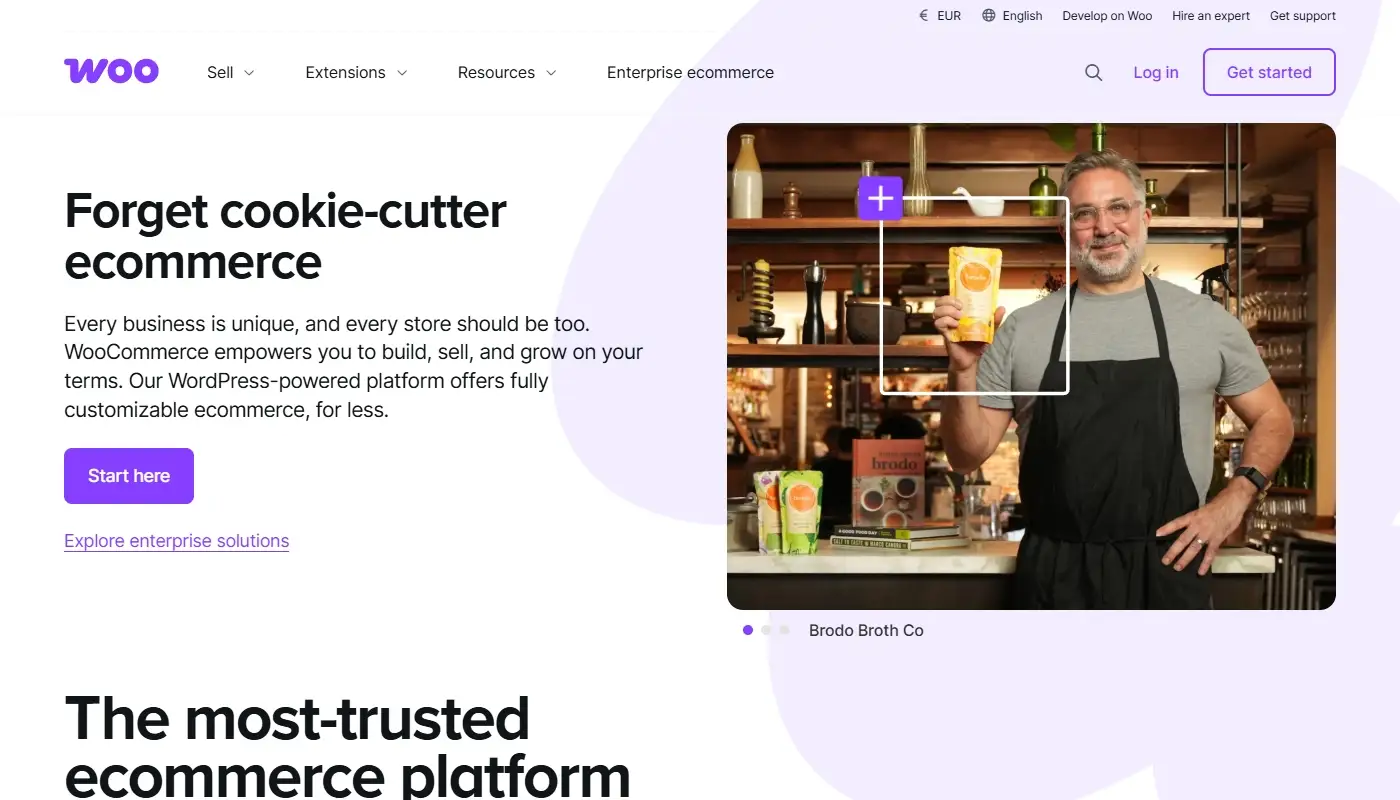
WooCommerce is a plugin that turns WordPress, the most widely used CMS in the world, into a store platform. Instead of an all-in-one SaaS model, you assemble your stack: hosting, WordPress core, WooCommerce, and whichever plugins and themes you need. The result can be extremely powerful and flexible, but it also demands more responsibility and technical awareness.
For teams that already know and like WordPress, WooCommerce is often the natural Shopify alternative. It allows you to combine a robust content engine (WordPress posts, custom post types, taxonomies) with a highly configurable store. You can model unusual content structures, build complex blogs or knowledge bases, and then tie products into that ecosystem in ways that are harder to reproduce on pure SaaS platforms.
The downside is maintenance and complexity. You become responsible for updates, security, performance, backups and plugin compatibility. For some businesses this is acceptable because they have in-house developers or a long-term agency relationship. For others, it becomes a hidden cost and a source of stress. As a Shopify alternative, WooCommerce makes sense when you want maximum control and are willing to own the technical stack in exchange.
BigCommerce
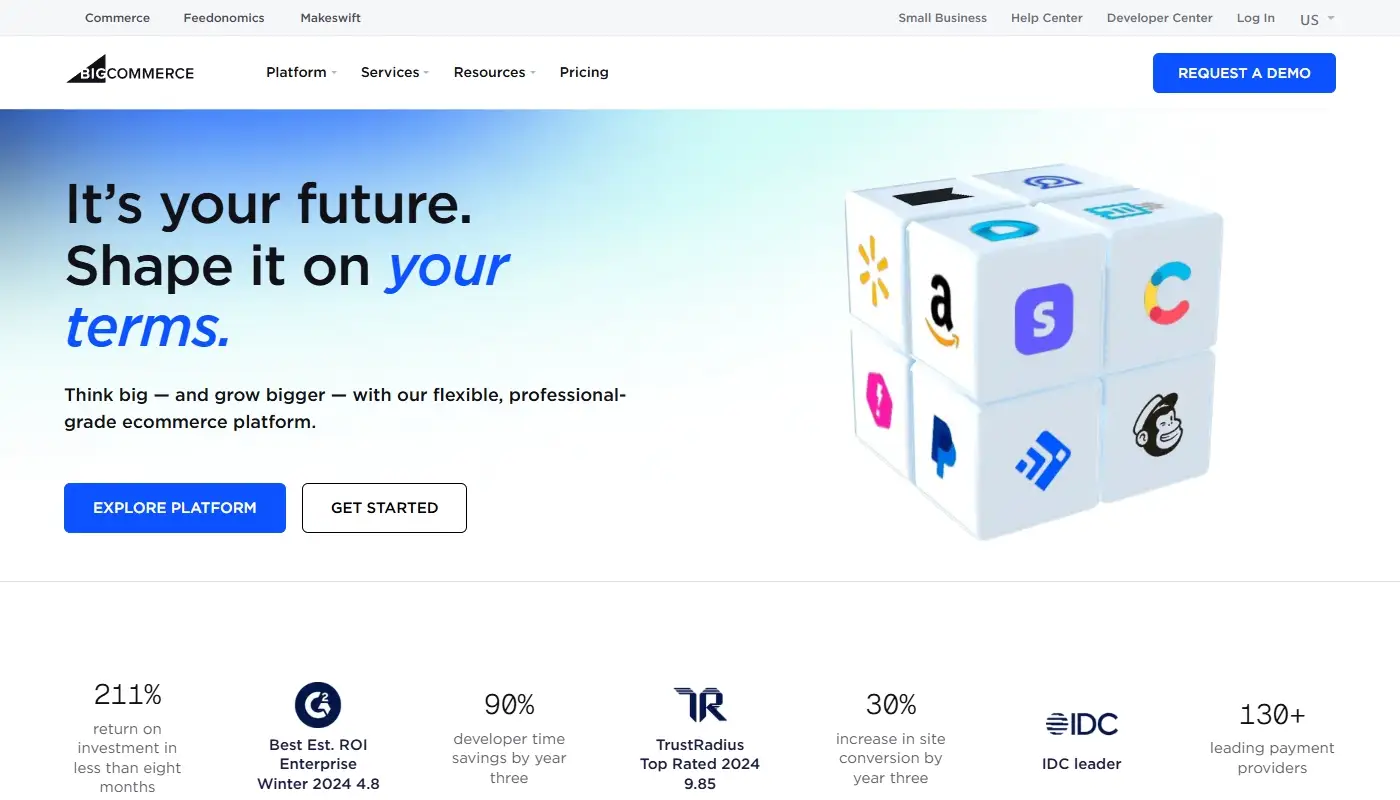
BigCommerce is a SaaS commerce platform that positions itself close to Shopify in ambition, but with a slightly different emphasis. It focuses strongly on performance, scalability and multi-channel commerce: selling across marketplaces, social platforms and other digital storefronts with a central product and order management system.
Where BigCommerce tends to shine is in situations where you want serious eCommerce capabilities, but maybe a different pricing structure, feature mix or technical architecture than Shopify offers. Larger catalogs, advanced product options, complex tax and shipping rules, and B2B scenarios are the kinds of use cases it is happy to handle. It also plays well as a “headless” commerce backend that feeds a custom front end.
From the perspective of a current Shopify merchant, BigCommerce is less about changing how your site feels and more about changing the engine under the hood. The presentation layer can still end up looking like a typical store unless you invest heavily in design and front-end work. If your pain points with Shopify are mainly around brand expression and content, BigCommerce may feel like a lateral move; if they are around scale, operations and enterprise features, it can be a serious contender.
Wix

Wix is an all-in-one website builder that has grown from a simple drag-and-drop tool into a fairly comprehensive platform with eCommerce, bookings, marketing tools and automation. Its main promise is that almost anyone can assemble a site visually, adjusting many small details directly on the canvas.
For stores leaving Shopify, Wix can be attractive if you want an “everything in one place” builder with a lot of visual freedom and a friendly learning curve. The editor allows you to place elements with more pixel-level control than Squarespace, and the platform includes extras like basic email marketing, CRM and automation flows aimed at small businesses.
The trade-off is structural discipline. That same freedom can make it easier to build layouts that look good initially but become hard to maintain and scale over time. Complex stores can start to expose limits in how product, category and content structures fit together. As a Shopify alternative, Wix is often a good fit for small local businesses or creator brands that want control and convenience more than deep eCommerce architecture.
Webflow and Headless Setups
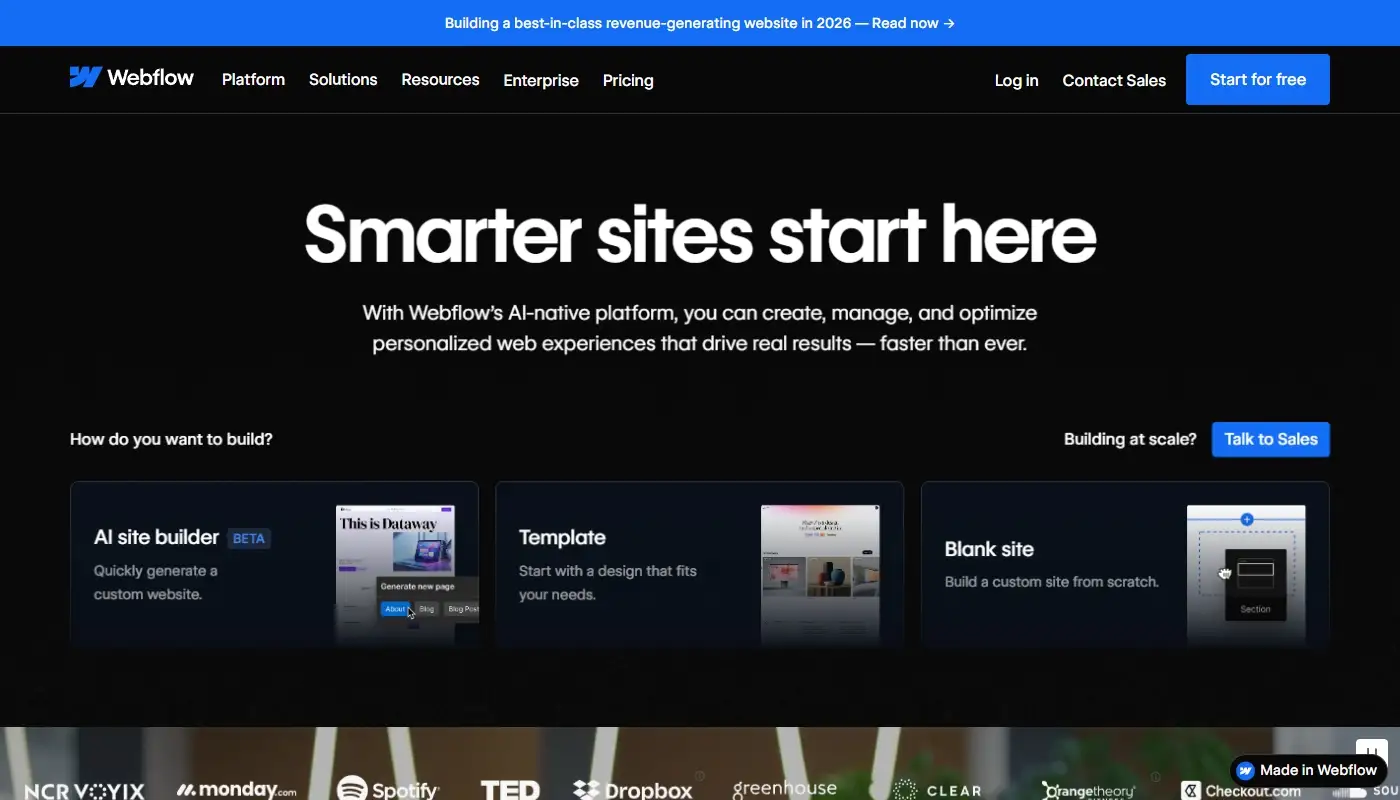
Webflow is a design-oriented tool that lets you build highly custom front-end experiences visually, outputting clean HTML, CSS and JavaScript. On top of that, it offers a CMS and an eCommerce module, and can also be used as the front end in a headless commerce setup where the store logic runs elsewhere (for example, on a dedicated commerce backend).
This direction is usually chosen by design teams, agencies or product-focused companies that see the website as a custom digital product rather than a template-based presence. Webflow gives you very fine control over layout, animations and interactions, which makes it possible to craft experiences that stand out from almost any out-of-the-box theme.
The catch is that Webflow (especially when combined with headless commerce) has a higher entry threshold. Someone on your team needs to think like a front-end developer, even if they work in a visual interface, and complex changes almost always require specialised skills. As a Shopify alternative, Webflow or a headless architecture makes sense when you’re ready to invest in a bespoke experience and have the resources to maintain it over time, not when you simply want a calmer, lower-maintenance setup.
Quick Comparison: Where Each Platform Tends to Fit
Here’s a condensed comparison focused on real-world use, not full feature matrices:
| Platform | Best suited for | Main strengths | Main trade-offs vs Shopify |
| Squarespace | Design-driven brands with small/medium catalogs and strong content needs | Beautiful templates, integrated pages + blog + store, low overhead | Less suited to huge catalogs and very complex logistics |
| WooCommerce | Teams comfortable with WordPress and custom development | High flexibility, powerful CMS, huge plugin ecosystem | Requires hosting, security, updates and more technical maintenance |
| BigCommerce | Larger stores needing SaaS infrastructure and multi-channel commerce | Strong scaling, enterprise features, marketplace integrations | Less “all-in-one website” feel; still very commerce-centric |
| Wix | Small businesses, creators and local brands needing “all-rounder” website | Flexible visual editor, many built-in marketing tools | Structure can become messy; complex stores can push its limits |
| Webflow (+eCom or headless) | Design-led teams treating the site as a custom product | Fine-grained design control, modern front-end capabilities | Higher complexity; developers or specialists almost always required |
This table doesn’t crown a single winner; it shows what kind of business each platform naturally supports. For a large, operations-heavy store, BigCommerce or staying on Shopify might be sensible. For a media-plus-store hybrid brand, WooCommerce or Webflow could be justified if you have a tech team.
But for a very common scenario-a design-conscious brand with a manageable catalog that’s tired of app sprawl and theme gymnastics on Shopify-Squarespace emerges as the most natural first candidate.
Why Squarespace Is Often the First Alternative Worth Evaluating
Squarespace is not the only solid alternative to Shopify, but it checks several boxes that matter specifically to brands leaving Shopify after a few years of growth.
First, it treats content and design as core. If you now rely on lookbooks, case studies, brand stories and long-form guides, Squarespace’s templates and section system make those pages look and feel like they belong to your brand, not like modified product grids. You can build narrative sequences with text, imagery and calls to action without constantly negotiating with a theme.
Second, it provides a calmer, more integrated stack. The platform combines site, blog, store and simple email campaigns, with fewer external pieces needed for core functionality. Instead of managing ten different apps for layout, forms, pop-ups and core marketing, you work with a smaller, cohesive toolset.
As stated in this Squarespace review, the website builder is built to help non-developers stay in control over the design customization process. Most structural changes-adding sections, adjusting layouts, creating new pages, reusing blocks-are handled in the visual editor. This doesn’t eliminate the need for expertise entirely, but it brings day-to-day control closer to the marketing or content team rather than to external developers.
Finally, for small and medium catalogs, Squarespace’s commerce layer is “enough” in a good way. It supports physical and digital products, variants, discounts, taxes and mainstream payment gateways, without trying to replicate every edge case of an enterprise system. For many ex-Shopify brands, that’s precisely the level of complexity they actually need.
All of this makes Squarespace a sensible first stop when you’re evaluating alternatives. If it covers what you need, you get a simpler, more design-forward setup. If it doesn’t, you still have WooCommerce, BigCommerce, Wix or Webflow as next Shopify migration options – but you’ve at least checked the variant that tends to align best with brand-led stores.
When Another Alternative Might Be Better Than Squarespace
There are clear cases where you should probably look beyond Squarespace, even if you like its philosophy.
If your catalog is very large and operationally complex, with thousands of SKUs, frequent price changes, deep B2B features or multi-warehouse logic, a platform such as BigCommerce-or simply staying on Shopify-may be more realistic. Squarespace can host serious stores, but it is not designed to be a heavy industrial commerce engine.
If you have an internal dev team and want maximum control over every layer, WooCommerce on WordPress or Webflow plus a headless backend become more attractive. They support unusual content structures, custom workflows and highly tailored front-end experiences-but only if you’re ready to own hosting, security, plugin dependencies and technical debt.
If your store’s future depends on aggressive automation and complex multi-channel selling, a migration to another commerce-centric platform with a deep integration ecosystem could make more sense than moving to a more “site-first” option.
In other words, Squarespace is often the best first candidate, but not a universal answer. It’s important to match the platform to the weight and direction of your business, not just to the pain points you feel in the moment.
How to Evaluate Squarespace as Your Next Platform
If you’re considering Squarespace as a primary Shopify alternative, a structured trial can tell you more than any comparison chart.
A good approach is to recreate a small but representative slice of your current site: one key product page, one category/collection overview, one long-form article or guide, and a basic home page. Doing this forces you to touch the parts of Squarespace that will matter day to day: design controls, content blocks, product configuration, URLs and basic SEO settings.
As you build that slice, notice:
- whether your brand aesthetics come through without constant compromises,
- how easy it is to mirror or improve the structure you’ve grown used to on Shopify,
- whether the editing experience feels clearer or more constrained than what you have now,
- and how your team reacts-does it feel approachable or intimidating?
This exercise doesn’t replace a full migration plan, but it gives you a grounded sense of whether Squarespace fits your actual work, not just your wishlist.
Conclusion: Many Alternatives, One Logical Starting Point
In 2025, merchants leaving Shopify are not short on alternatives. WooCommerce, BigCommerce, Wix, Webflow and other platforms can all claim a share of the “Shopify alternatives” space, and each can be the right answer for certain types of businesses.
But for a large group of brands-those with manageable catalogs, strong emphasis on visual identity and storytelling, and a desire to simplify their tech stack-the most sensible first step is to see whether Squarespace meets their needs. It offers a different balance: less raw commerce complexity, more integrated design and content, and a level of control that feels accessible to non-developers.
All of this makes Squarespace a sensible first stop when you’re evaluating alternatives. If it covers what you need, you get a simpler, more design-forward setup. If it doesn’t, you still have WooCommerce, BigCommerce, Wix or Webflow as next candidates – but you’ve at least checked the option that tends to align best with brand-led stores. And if, after that first pass, your choice реально comes down to 2 options only – stay on Shopify or move to Squarespace – a detailed Squarespace vs Shopify comparison may help you out.
Decide to make a switch? A trusted Shopify → Squarespace migration service like Shopify-to-Squarespace.com comes in: handling the practical work of mapping products, URLs, content and design so that your new platform feels like an evolution of your store, not a risky restart.